
How to Learn Financial Literacy Through Reading (Free Book Included)
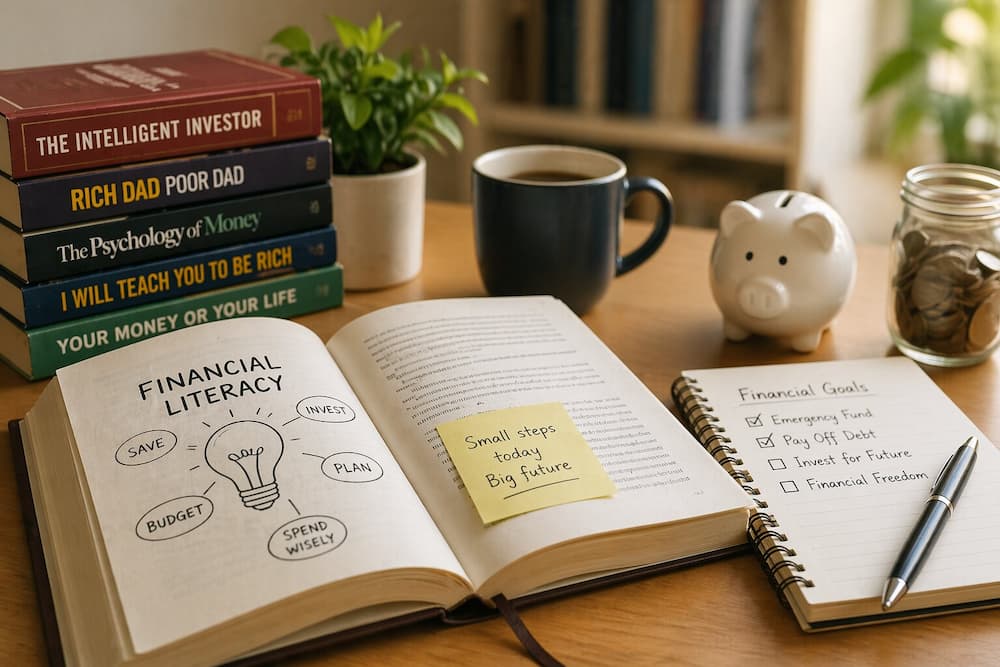
Financial literacy is rarely something people are formally taught. Many only realize this after receiving their first paycheck and wondering where the money went. On World Book Day, this becomes clear: when life doesn’t teach money well, books often do.
Why It’s Difficult to Handle Money
Handling money is often seen as a basic life skill, but for many people, it doesn’t feel basic at all.
The difficulty usually isn’t about math or intelligence. It’s about a mix of limited exposure, pressure, and a lack of structured learning. Many people were never formally taught how to budget, save, or manage debt, which makes it harder to build confidence early on.
This creates a false belief: that financial literacy is something you either “have” or “don’t have.” In reality, it is a learned skill. And like all skills, it improves with repetition, clarity, and practice.
There’s also a strong emotional side to money. People often associate it with stress, past mistakes, or uncertainty. Financial stress can impair decision-making and long-term planning (American Psychological Association, 2022), making it harder to maintain consistent good financial habits.
This is why reading money management books can feel overwhelming at first—you must overcome hesitation and build new habits simultaneously.
Reading is an Effective Way to Learn Financial Literacy
If you’re looking for the easiest yet effective way to learn financial literacy, try reading.
Reading creates a unique learning environment that other formats often cannot replicate. It allows repetition without pressure, reflection without judgment, and learning at a personal pace. These conditions are especially important for financial topics, which often feel intimidating in real-time discussions or fast-paced online content.
Consistent financial education improves saving behavior and long-term financial planning outcomes (OECD, 2020). The key factor is consistency, not intensity.
Books naturally support this because they:
- Break down complex financial systems into structured ideas
- Provide real-life examples that are easier to understand
- Allow readers to revisit difficult concepts multiple times
This is why money management books and well-written beginner finance books are often recommended as foundational tools. They simplify what feels complicated and base it on how money works in real life.
Reading also builds financial vocabulary. Without understanding the language of money, even simple concepts can feel inaccessible, which is why many free financial literacy resources focus on simplifying terminology for beginners.
Over time, familiarity builds confidence. And confidence shapes how people make money decisions.
Where to Start: Choosing the Right Beginner Finance Books
Starting is often the hardest part. There are thousands of finance books available, but not all are helpful for beginners. Some assume prior knowledge or introduce advanced concepts too early.
Good beginner finance books usually share these traits:
- Simple and direct language
- Step-by-step breakdowns of financial concepts
- Focus on foundation-building
World Book Day reminds us that the value of a book lies not in its complexity but in its clarity and usefulness to the reader at their current stage. And being introduced to learn financial literacy means being exposed to useful topics such as:
- Basic income management
- Budgeting and expense tracking
- Building savings habits
- Understanding debt and interest
Financial literacy builds in layers. Without the foundation, advanced topics like investing or wealth building will not make practical sense.
How to Learn Financial Literacy through Reading
Reading by itself only opens the door. The real shift happens in what you do with it afterward.

A lot of people collect money management books or browse through beginner finance books with good intentions, but stop at the information. They finish chapters, underline ideas, maybe even highlight a few quotes, then move on without changing anything. That’s usually where frustration starts, because knowledge without application never feels like progress.
If the goal is to genuinely learn financial literacy, reading has to become a habit, not a one-time activity. In a practical approach, it means:
1. Slow the reading down on purpose
Instead of rushing through chapters, focus on understanding one idea at a time. It’s better to fully understand one principle, like budgeting or saving, before moving forward. Learning money is less like scrolling and more like stacking—each idea supports the next.
2. Turn ideas into personal translation
Every time you read a concept, pause and ask: “What does this look like in my real life?”
If a book talks about budgeting, don’t just understand the definition—look at your own expenses. If it discusses saving systems, think about your actual income flow. This is the practical impact of knowing how to learn financial literacy through reading. It’s beyond theoretical. The book becomes a mirror of your current financial situation.
3. Apply each concept to your own life
Track your spending for a week. Set a daily or weekly spending limit. Open a savings account if you don’t have one yet. These small steps may seem simple, but they create real behavioral change.
4. Expect repetition to do the real work
Most financial concepts don’t fully land the first time. When you return to ideas after applying them, your understanding deepens naturally. This is where reading becomes powerful: it meets you at different stages of your financial awareness.
This approach aligns with behavioral learning principles, where repetition and application strengthen long-term understanding (Kahneman, 2011). Instead of memorizing information temporarily, you begin to internalize it through practice and reflection.
Join community-driven learning opportunities that make financial literacy and entrepreneurship simple, practical, and accessible for you.
Common Mistakes When Reading Money Management Books
Reading money management books can feel like a turning point. For many people, it’s the first time financial ideas are explained in a structured, calm, and understandable way. It creates hope that maybe this is how they finally begin to learn financial literacy properly.
But reading alone doesn’t automatically change financial behavior. A book can explain the system, but it cannot force application. And this is where many readers unknowingly get stuck.
The most common mistakes are:
Jumping from One Resource to Another Quickly
With so many beginner finance books and free financial literacy resources available, it becomes easy to consume information without giving any single idea enough time to settle. Financial concepts need repetition and real-life testing, not rapid switching.
Passive Reading
This happens when someone reads financial advice but doesn’t connect it to their actual life. For example, understanding budgeting in theory but never looking at personal spending patterns. This disconnect is one of the biggest reasons people struggle with money management.
Comparison while Learning
They measure their progress against others who may have started earlier or have different financial circumstances. This creates unnecessary pressure and discouragement, even when progress is actually happening.
Books are not meant to be consumed quickly like content. They are meant to be used slowly, revisited often, and applied continuously. That is how money management books shift from just bringing information into actual financial change.
A Simple 30-Day Reading Plan for Beginners
This is a slow conversation between you and money. You don’t need to finish a book in 30 days. You just need to stay consistent enough for ideas to start making sense in real life.
Week 1: Track Your Finances
Start by observing. Read basic chapters on spending or money habits. Track your daily expenses (no matter how small). Don’t try to fix anything yet—just record what’s happening. The goal is to see your real financial behavior clearly, without judgment.
Week 2: Start Connecting Spending to Meaning
Now that you’ve observed, begin sorting. Group your expenses into simple categories:
- essential (needs)
- flexible (wants)
- future (savings/debt)
Then, try adjusting just ONE small spending habit (like one less impulse purchase per week).
Week 3: Understand Debt and Create a Safety Cushion
This is the clarity stage. Read sections about debt, interest, or savings systems. If you have debt, list it clearly (amount, due date, minimum payment). If you don’t, focus on building a simple savings habit. Start with small amounts, save them consistently, then raise when you have more.
Week 4: Make Reading a Habit
Choose one simple lesson that stood out from your reading. Apply it for a full week without changing anything else. For example:
- No-spend day a week
- Automatic savings transfer
- Weekly 10-minute money check-in
Even 10–15 minutes a day with free financial literacy resources or money management books is enough to shift how you see money over time. You’ll understand your patterns better than before and take action.
MPOWR Foundation’s mission is to support that beginning. Through financial literacy programs, entrepreneurship education, and community outreach, the goal is to make financial knowledge more accessible to individuals and families, regardless of background or starting point.
The Ultimate Money Management Guide
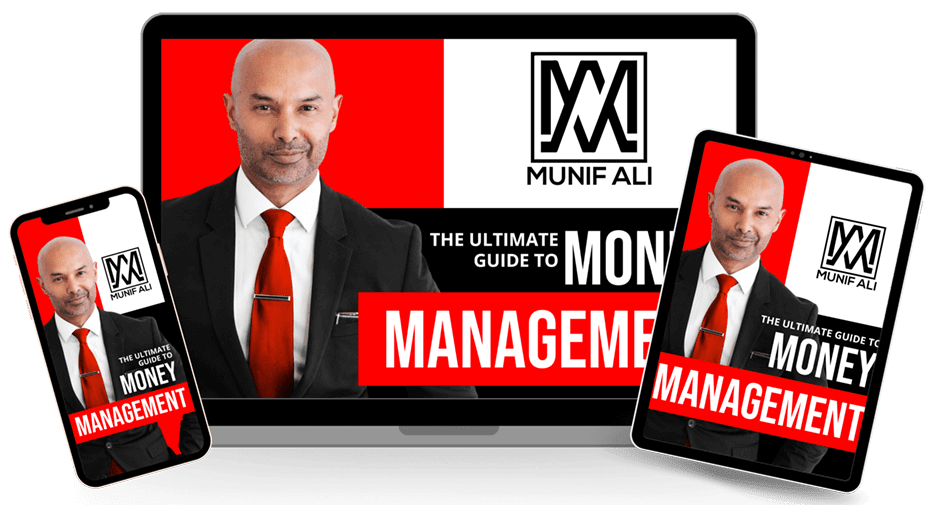
As part of MPOWR Foundation’s commitment to financial accessibility, The Ultimate Guide to Money Management by Munif Ali is offered as a free resource for beginners.
It is designed to simplify financial concepts into practical steps that can be applied in everyday life. It covers the strategies he used to become a self-made millionaire from nothing. On World Book Day, this idea becomes especially important: the right book can be the starting point for real change when placed in the right hands at the right time.
Start your financial literacy journey!
Key Takeaways
- Financial literacy is often not formally taught in schools, which is why many adults learn it later through experience, trial, or external resources.
- Reading is one of the most effective entry points to learn financial literacy because it allows self-paced learning, repetition, and reflection without pressure.
- Beginner finance books are most effective when they use simple language, real-life examples, and foundational topics such as budgeting, saving, and debt.
- Common barriers to learn financial literacy include information overload, inconsistency, lack of application, and comparison with others.
- A structured but flexible 30-day reading approach can help build financial awareness gradually.
References:
American Psychological Association. (2022). Stress in America™ 2022: Concerned for the future, beset by inflation. https://www.apa.org/news/press/releases/stress/2022
Kahneman, D. (2011). Thinking, fast and slow. Farrar, Straus and Giroux. https://us.macmillan.com/books/9780374533557/thinkingfastandslow
Organisation for Economic Co-operation and Development. (2020). OECD/INFE 2020 international survey of adult financial literacy. https://www.oecd.org/financial/education/oecd-infe-2020-international-survey-of-adult-financial-literacy.pdf